
 Ghazanfar Ali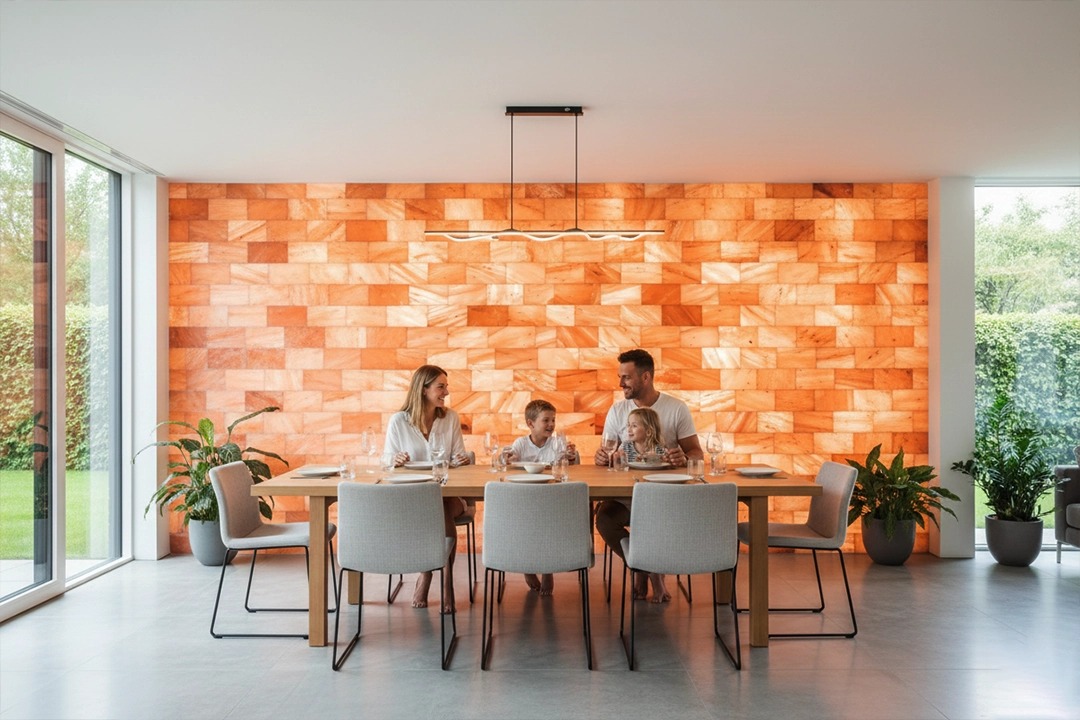
Learn how to create modern interior designs using pink salt tiles to add texture, warmth, and depth while maintaining a calm, natural, and balanced atmosphere.
Pink salt tiles have already been retired from flat wall installations and are now being used to form expressive interiors. The most evident changes include the application of the three-dimensional surfaces. Designers prefer textured layouts, giving depth and movement as opposed to smooth finishes. This transformation represents a wider trend in design within the US, where interiors are being experienced as layered and designed, as opposed to being simple. When pink salt tiles are designed in 3D patterns and supported by Himalayan salt bricks, they introduce visual interest while maintaining a calm and grounded atmosphere. This article focuses entirely on how 3D salt tile designs add depth to interior spaces and why this approach is gaining attention.
Understanding Depth in Interior Design
Depth in interior design is not only about physical thickness. It is about how surfaces interact with light, shadow, and perspective. Flat walls can feel static, especially in large or open spaces. Designers often introduce depth to avoid visual fatigue. Pink salt tiles naturally support this goal because their crystalline structure already reflects light unevenly. When these tiles are shaped into three-dimensional patterns, the surface becomes active. Himalayan salt bricks are often used behind or alongside these designs to provide stability and visual balance, allowing pink salt tiles to remain the focal point.
Why the 3D pink salt wall is gaining popularity
In US commercial and residential interiors, there is a growing preference for materials that feel natural but still modern. 3D Tiles meet this expectation. They offer texture without sharp contrast and depth without heaviness. Unlike decorative panels made from synthetic materials, pink salt tiles maintain a natural appearance even when shaped. Designers appreciate that the depth comes from the material itself rather than added layers. Salt bricks support these installations by creating consistent backing and alignment, especially in larger wall sections.
How Texture Changes Spatial Perception
Textured surfaces influence how a room feels. A 3D salt wall can make a wide space feel more engaging or help a narrow area feel intentional rather than empty. Tiles arranged in raised or patterned formats create subtle variations across the wall. Light moves differently across these surfaces throughout the day. This natural shift keeps interiors visually active without distraction. Himalayan pink salt bricks often frame or anchor these designs, ensuring the textured tiles do not feel visually disconnected from the rest of the structure.
Design Applications in Modern US Interiors
Some of the applications of pink salt tiles include reception areas, feature walls, lounges, and wellness-oriented interiors. They also bring personality to offices without crowding the place. In retail environments, they help define brand identity through texture rather than signage. Himalayan salt bricks are commonly used in adjacent walls or structural sections to support continuity. Together, Tiles and salt bricks create interiors that feel curated but not forced, which aligns well with modern US design preferences.
Balance Between Structure and Design
One reason 3D pink salt tiles work well is their balance between form and structure. While the tiles create surface movement, salt bricks provide visual weight and grounding. This balance prevents the design from feeling decorative only. Tiles remain the highlight, while Himalayan salt bricks quietly support the layout. Designers often use this combination to ensure that textured walls feel integrated rather than added later.
Installation Considerations for 3D Surfaces
Installing a 3D Himalayan salt wall requires careful planning. Alignment matters more when surfaces are raised. Each tile must sit correctly to maintain pattern consistency. Himalayan salt bricks are often used as a base layer to support even placement. Proper spacing and controlled indoor conditions are essential. Tiles are long-term interior use tiles. When fitted properly, they do not distort their shape, thus they preserve their depth.
Maintenance and Longevity
From a practical standpoint, pink salt tiles designed in three-dimensional patterns remain manageable. Their raised surfaces do not require complex maintenance when used indoors. Cleaning it is often enough to have regular dry-cleaning. The tiles have Himalayan salt bricks behind them or around them to provide structural integrity, particularly in high-traffic areas. This combination supports durability while preserving the visual depth that defines the design.
Visual Impact Without Overstatement
It is important to approach textured salt installations with realistic expectations. Tiles are design elements, not technical systems. Their value lies in how they shape space visually. The 3D designs make it three-dimensional, less flat, and contribute to a relaxing atmosphere. This effect is also achieved by Himalayan salt bricks that enhance strength and uniformity. They work together in order to improve interiors without any exaggeration.
Why Designers Continue to Choose 3D pink salt tiles
The popularity of 3D pink salt tiles is a sign of the change toward the consideration of material usage. Designers are giving more attention to surfaces that are natural, deliberate, and appealing to the eye. Three-dimensional salt tile layouts meet these goals while remaining adaptable. Himalayan salt bricks ensure that these designs stay grounded and cohesive. This pairing allows depth to feel natural rather than decorative, which is why it continues to gain traction.
Conclusion
The process of adding depth to spaces using Tiles is a design process based on the elements of texture, balance, and material honesty. These tiles will turn the flat surfaces into active elements of the space, but not saturate it. They are stable, cohesive, and durable when they are in the support of Himalayan salt bricks. This blend is based on the recent tendencies of US interior design that appreciate experience, simplicity, and natural materials. By focusing on depth rather than excess, pink salt tiles help interiors feel intentional, engaging, and complete.
FAQs
Q1. Are 3D Tiles applicable in commercial interiors?
Indeed, when they are indoors and installed in offices, retail areas, and reception areas, they are usually utilized there.
Q2. Do raised Tiles require special care?
No, basic dry maintenance is usually enough in controlled environments.
Q3. What is the reason behind the use of Himalayan salt bricks with pink salt tiles?
They are used to give structural support and balance to the design and enable the design to be coherent.
