
 Backlinks Hub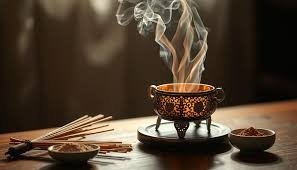
The Small Detail That Transforms a Room
There’s a moment, when you walk into a home that smells genuinely wonderful, where something in you just settles. It’s not the furniture, it’s not the lighting, though those help. It’s the scent. And at the centre of that experience, more often than not, is a well-chosen incense burner sitting quietly on a shelf, doing more atmospheric heavy lifting than most people give it credit for.
Choosing the right incense burner is one of those decisions that sits at the intersection of the practical and the personal. Get it right, and you’ve added something genuinely lovely to your daily life. Get it wrong, and you’ve got ash on your windowsill and a vague headache.
Scent and Space — The Science of Why It Works
Smell is the most direct of the senses. While sight and sound take scenic routes through the brain’s processing centres, scent travels straight to the limbic system, the part that handles emotion and memory. It’s why the smell of a particular wood smoke can drop you into a childhood memory in seconds, or why certain resins make a room feel immediately more serious and sacred.
This isn’t mysticism. It’s neuroscience. And it’s precisely why aromatherapy at home isn’t just a wellness trend but a genuinely effective way to shape how a space feels. Warm, woody scents tend to calm. Citrus and green notes sharpen focus. Florals open a room up. Incense, which draws on centuries of knowledge about aromatic plants and resins, is particularly good at building a layered, lasting sensory environment, in a way that a scented candle, for all its charm, rarely matches.
Matching Your Burner to Your Burning Style
Not all incense is burned the same way, and not all burners are interchangeable. Matching burner to incense type is the first practical decision you’ll make, and it matters more than most people realise.
Stick Incense Holders
Stick incense is the most familiar format, and it’s served well by a few different holder styles. Boat-shaped ash catchers are the most practical: they catch the falling ash along a long channel and look elegant on a shelf. Flat holders with a single hole work fine for shorter sticks in a well-ventilated room. Vertical holders suit thicker, denser sticks and work particularly well when you want the smoke to rise and fill a higher-ceilinged space.
Whatever you choose, think about surface protection and airflow. A burner placed directly on a wooden surface without a plate beneath it is a decision you’ll regret.
Cone and Resin Burners
Cone incense tends to produce a richer, denser fragrance than sticks, partly because of the greater surface area burning at once. Backflow burners, which create the visual effect of smoke cascading downwards like water, have become genuinely popular as decorative objects in their own right.
Resin incense, burned on charcoal discs inside brass or ceramic censers, is the format with the longest liturgical history, and it shows. The fragrance is deep, complex and long-lasting. If you want your home fragrance to feel like a ritual rather than background noise, resin burning is worth exploring.
Placement is Everything
You can have the finest burner in the world and still get the experience completely wrong if you put it in the wrong spot.
In practical terms, incense works best in rooms where there’s gentle air movement but no strong draught. Living rooms and reading corners are ideal. Home offices benefit from focus-oriented scents like cedarwood or frankincense. Bathrooms, if well-ventilated, can be transformed by lighter floral or herbal blends.
Height matters, too. Scent rises and then diffuses, so placing a burner at mid-height on a shelf or side table tends to fill a room more evenly than placing it on the floor.
Safety is straightforward but worth stating: keep burners away from curtains, paper and anything flammable, away from draughts that could carry embers, and well out of reach of children and pets.
Material and Aesthetic — Form Should Follow Feeling
A good incense burner is a decorative object as much as a functional one, and the material it’s made from shapes both how it looks and how it performs.
Ceramic burners are versatile, widely available and come in an enormous range of styles, from minimal and modern to ornate and hand-painted. Brass burners, particularly the traditional censer style, retain heat exceptionally well and develop a beautiful patina over time. Soapstone is soft-looking and warm to the touch. Cast iron is serious, durable and suited to resin burning. Wood holders are charming for stick incense but need more care.
The point is to choose something you’d be happy to have sitting on your shelf when no incense is burning, because it will be. Think of it as an interior detail that earns its place.
Building a Ritual Around Your Burner
The homes that smell best are usually the ones where incense isn’t an occasional treat but a quiet, consistent habit. Morning frankincense while the coffee brews. Sandalwood in the evening when the day needs to be left behind. A particular resin blend reserved for reading or focused work.
There’s something worth acknowledging here about the depth of this practice. Incense has been central to religious and contemplative traditions across cultures for thousands of years, from the temple incense of the Old Testament to the thuribles of Catholic liturgy, to Japanese koh-do, the formal art of appreciating incense. Bringing that into the home isn’t pretentious, it’s participating in something genuinely old and genuinely good.
You don’t need a ceremony. You just need a moment of intention, and the right burner to carry it.
Choosing Incense That Actually Suits Your Home
The burner gets you halfway there. The incense itself does the rest.
A few principles worth knowing:
- Japanese incense (Nippon Kodo is a reliable brand) tends to be low-smoke, refined and exceptionally consistent. Good for everyday use.
- Indian incense is often richer and more resinous, sometimes heavier. Quality varies enormously, so buy from a specialist rather than a corner shop.
- Natural resin incense, burned on charcoal, gives the most complex and authentic fragrance. Frankincense, myrrh and copal are excellent starting points.
- Synthetic fragrance blends are usually identifiable by a sharp, slightly chemical top note. They’re cheap for a reason, and the headache they tend to produce is a reliable signal to switch.
If you’re new to incense, buy small. Most good suppliers sell sample packs, and finding your signature scent is genuinely enjoyable when you don’t feel locked into a bulk purchase.
A Small Detail That Makes a Real Difference
The best homes have a quality of intention about them. Not showiness, not perfection, but the sense that someone has thought carefully about how a space should feel to live in. Scent is one of the most accessible and most overlooked ways to achieve that.
A well-chosen incense burner, used consistently with quality incense that suits your home and your habits, repays the small investment many times over. It changes the feel of a room in a way that’s hard to quantify but immediately noticeable to anyone who walks through the door.
To enhance the experience, many people choose elegant home fragrance accessories designed for safe and stylish incense use, turning a simple ritual into a refined interior detail.
That’s the quiet power of the right incense burner, chosen with a little care and used with a little intention.
