
 Qamer javed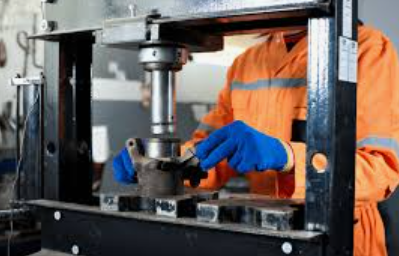
Factories rely on presses every day to form metal, punch holes, bend parts, and create thousands of components. Three main types dominate the market: mechanical presses, hydraulic presses, and servo presses. Each has its own drive system, strengths, and ideal use cases. Choosing the wrong one can slow production, raise costs, or lead to poor part quality. In this article, we compare them clearly so you can see which fits your factory best.
What Is a Mechanical Press?
A mechanical press uses an electric motor to turn a large flywheel. The flywheel stores kinetic energy. When you engage the clutch, that energy transfers through a crankshaft or eccentric gear to move the ram up and down in a fixed stroke.
These presses deliver full force near the bottom of the stroke. They run at high speeds, often 50 to 300 strokes per minute depending on size. The motion is consistent and repeatable once set up.
Mechanical presses cost less upfront and suit high-volume production of simple, shallow parts like brackets, washers, or automotive panels.
What Is a Hydraulic Press?
A hydraulic press works with fluid power. An electric pump pushes oil into hydraulic cylinders, forcing the ram down. Valves control the flow, so you adjust speed, force, and position easily.
The key feature is constant force throughout the entire stroke. You get full tonnage from the top to the bottom, which helps with deep drawing or jobs that need pressure held at the bottom for a few seconds.
Hydraulic presses move slower—usually 10 to 60 strokes per minute—but they handle very thick materials and complex shapes well. They appear often in forging, deep forming, rubber molding, and heavy bending.
What Is a Servo Press?
A servo press replaces the flywheel and clutch with a high-torque servo motor connected directly or through a ball screw to the ram. The motor follows a programmed path, giving you full control over speed, position, force, and timing.
You can program different speeds in one cycle: fast approach, slow forming to reduce cracks, pause for material flow, then fast return. This flexibility cuts defects and extends die life.
Servo presses use energy only when moving, so they save 30–70% on electricity compared to hydraulic models. They combine the speed of mechanical presses with the control of hydraulic ones.
For more details on different press types, visit https://miharmle-cnc.com/.
Speed and Cycle Time Comparison
Mechanical presses lead in raw speed for repetitive, simple stamping. Their fixed motion allows very high cycles per minute, making them ideal for progressive dies running non-stop.
Hydraulic presses are the slowest because fluid movement takes time, and pumps need to build pressure. They suit lower-volume or heavy-duty jobs where cycle time is not the main concern.
Servo presses reach speeds close to mechanical in many cases, especially with optimized programming. They often outperform mechanical on complex parts by shortening unnecessary slow sections of the cycle.
If your factory needs maximum parts per hour on flat work, mechanical usually wins. For varied or precision jobs, servo frequently delivers higher overall output.
Force Delivery and Tonnage Comparison
Hydraulic presses provide full rated force at any point in the stroke. This makes them perfect for deep drawing, coining, or applications requiring dwell time under pressure.
Mechanical presses deliver peak force only near bottom dead center. Above or below that point, force drops quickly, so they work best for shallow forming or blanking.
Servo presses behave like mechanical near the bottom but allow programmable force profiles. Some models maintain near-constant force like hydraulic, depending on the drive design.
For constant high force on thick or deep parts, hydraulic remains strong. Most everyday stamping jobs favor mechanical or servo.
Precision, Repeatability, and Part Quality
Servo presses offer the highest precision. You control every aspect of the ram motion down to fractions of a millimeter. This reduces springback, improves flatness, and tightens tolerances on critical features.
Mechanical presses give good repeatability for fixed setups but cannot adjust mid-cycle. Small changes in material thickness can affect results.
Hydraulic presses provide decent control through pressure settings, but fluid compressibility and temperature changes can introduce slight variation.
If your parts demand tight specs—like electronics connectors, medical components, or fine-blanked gears—servo usually gives the best results.
Energy Consumption and Operating Costs
Mechanical presses use moderate energy. The motor runs constantly to keep the flywheel spinning, but overall consumption stays low once at speed.
Hydraulic presses consume the most power because pumps run continuously, even when the ram is idle. Heat buildup in the oil also requires cooling systems.
Servo presses are the most efficient. The motor idles with almost no power draw and only uses energy during actual pressing. Many users report big drops in monthly electricity bills after switching.
Although servo presses cost more to buy, the energy savings and lower maintenance often pay back the difference in 2–4 years.
Maintenance and Downtime Comparison
Mechanical presses have wear items like clutches, brakes, and bearings that need regular checks and occasional replacement.
Hydraulic presses require fluid changes, filter replacements, seal inspections, and leak repairs. Downtime from hydraulic issues can be longer.
Servo presses have the fewest wear parts—no clutch, no fluid, no belts in direct-drive models. Motors and drives are reliable with proper cooling, so maintenance stays low and unplanned stops are rare.
For factories that hate frequent breakdowns, servo often proves the most dependable long-term choice.
Best Applications for Each Type
- Mechanical presses: High-speed blanking, piercing, shallow drawing, progressive dies in automotive, appliance, and hardware production.
- Hydraulic presses: Deep drawing, forging, straightening, molding composites, heavy bending, or custom low-volume work.
- Servo presses: Precision forming, fine blanking, multi-stage forming, advanced materials (AHSS, aluminum), flexible batch production, energy-sensitive plants.
Many modern shops use a mix or gradually replace older mechanical and hydraulic models with servo for better overall performance.
How to Decide Which Press Is Right for Your Factory
Ask yourself these practical questions:
- Are most jobs high-volume and simple? Mechanical may be enough and save money upfront.
- Do you form deep shapes, thick plates, or need dwell time? Hydraulic is still hard to beat.
- Do you want better precision, lower energy bills, longer tool life, and flexibility for future parts? Servo is worth the investment.
- How important is electricity cost in your area?
- Will production volume grow or change soon?
Talk to suppliers, run sample parts if possible, and calculate total cost of ownership—not just purchase price.
Conclusion
Mechanical presses deliver unbeatable speed and low cost for steady, high-volume stamping of basic shapes. Hydraulic presses provide unmatched force flexibility for deep or heavy work. Servo presses combine speed, precision, energy efficiency, and programmability, making them the go-to choice for many factories moving into higher-quality or greener production.
There is no universal “best” press—it depends on your parts, volume, budget, and goals. Evaluate your current and future needs carefully. In many cases today, upgrading to a servo press brings the biggest gains in efficiency, quality, and long-term savings.
You can explore different models, including reliable power press machine options, to find the right fit for your shop.
