
 Eisenh ower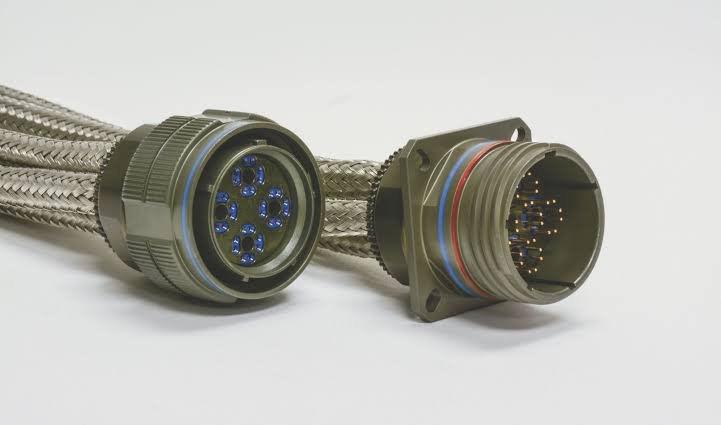
Industrial environments are inevitably hugely wide-ranging. In the UK alone, these settings encompass the likes of manufacturing plants, chemical processing sites, construction projects, offshore wind farms, and oil platforms in the North Sea.
In environments like these, electrical connections can be subject to extreme conditions. Amid such threats as rain, salt spray, dust, vibration, extreme temperatures, and even potentially explosive atmospheres, it often isn’t an option to depend on standard domestic or office plugs.
Such punishing conditions underscore the need for only the most suitable industrial electrical connectors to be used. When the right components are chosen for a given application, this greatly helps to ensure reliability, safety, regulatory compliance, and minimal downtime.
Let’s take a closer look, then, at how engineers, maintenance teams, and specifiers can ensure only the best possible industrial connectors are chosen each and every time.
Firstly, What Is the Nature of the Harsh Environment?
Before you begin comparing different industrial electrical connectors, it will be crucial to understand what kind of conditions you are dealing with. This will necessitate mapping out the real-world threats, which may include one or several of the following:
- Water and dust ingress, as can be major risks in outdoor, marine, or washdown areas. The likes of the food and beverage and pharmaceuticals sectors need to be mindful of the scope for water and dust to cause problems.
- Temperature extremes, ranging from freezing conditions on Scottish sites to high heat near furnaces or ovens.
- Vibration and shock, as can occur in a variety of settings where machinery, vehicles, or heavy equipment are in active use.
- Corrosion arising from coastal, chemical, or salty atmospheric conditions.
- Potentially explosive gases or dusts, as may be an issue across oil and gas, mining, or chemical applications.
- Mechanical stress occurring over time due to frequent mating cycles and rough handling.
It is also of critical importance, of course, to be well-informed on compliance obligations. UK regulations often require adherence to standards such as IEC 60529 (IP ratings), IEC 60309 (industrial plugs/sockets), and the BS EN 60079 series (for explosive atmospheres).
The Essential Selection Criteria for Industrial Connectors
The below rundown doesn’t necessarily encompass every single factor that professionals will need to think about when deciding on connectors.
Nonetheless, these are many of the most essential aspects for making sure the components eventually used will be able to stand up to even the most unforgiving conditions:
- Ingress Protection (IP) Ratings
Assessing a given connector’s ingress protection qualities is normally the starting point for those who are seeking out the right connectors for a harsh environment.
It is, then, vital for engineers to consult the IP rating system (IEC 60529) when they are looking to ascertain a connector’s ability to resist dust and moisture.
At the lower end of the IP rating scale, an IP44 rating is standard for many industrial sites. Connectors with this rating can be trusted to protect against solid objects of more than one millimetre, as well as splashes of water.
The highest standard, though, is IP69K. If a connector has this rating, it can be depended on to protect against high-pressure, high-temperature water jets.
- Material And Construction
The environment will dictate the housing material that the chosen connector needs to have. For standard industrial use, impact-resistant thermoplastics – such as PBT or nylon – are frequently used, due to their ultraviolet (UV) stability and chemical resistance.
If, however, the connector will need to withstand extreme mechanical stress, the decision may be made to look for glass-fibre reinforced or metal-bodied (stainless steel or aluminium) options. These can be ideal for areas with heavy vehicle traffic or forklift risks.
- Corrosion Resistance
Are you seeking connectors for use in a chemical or coastal plant? If so, looking for options with nickel-plated or gold-plated contacts will help prevent oxidation and maintain electrical integrity.
- Temperature Range
As far as the majority of industrial uses are concerned, it will be sufficient to look for connectors that can withstand a temperature range of -40°C to +125°C (or higher).
However, special high-temperature variants are available that can cope with 200°C or more, such as near engines or ovens.
- Vibration And Shock Resistance
Connectors should adhere to standards like IEC 61373 or MIL-STD (Military Standard) equivalents.
When you opt for connectors that incorporate secure locking mechanisms such as bayonet, screw, or push-pull with secondary locks, this will greatly help guard against the risk of disconnection.
Well-Chosen Industrial Connectors Can Make a Profound Difference
When engineers, specifiers, and maintenance teams take the time and care to invest in the most suitable connectors for their given projects, they will be going a long way to avoiding costly failures, safety risks, and production halts.
This can be particularly strongly the case in the UK, where industries are demanding and the climate can be notoriously variable and unpredictable.
Ultimately, a smartly chosen industrial connector will quickly pay for itself through the considerable uptime, performance, and compliance benefits it brings.
