
 Backlinks Hub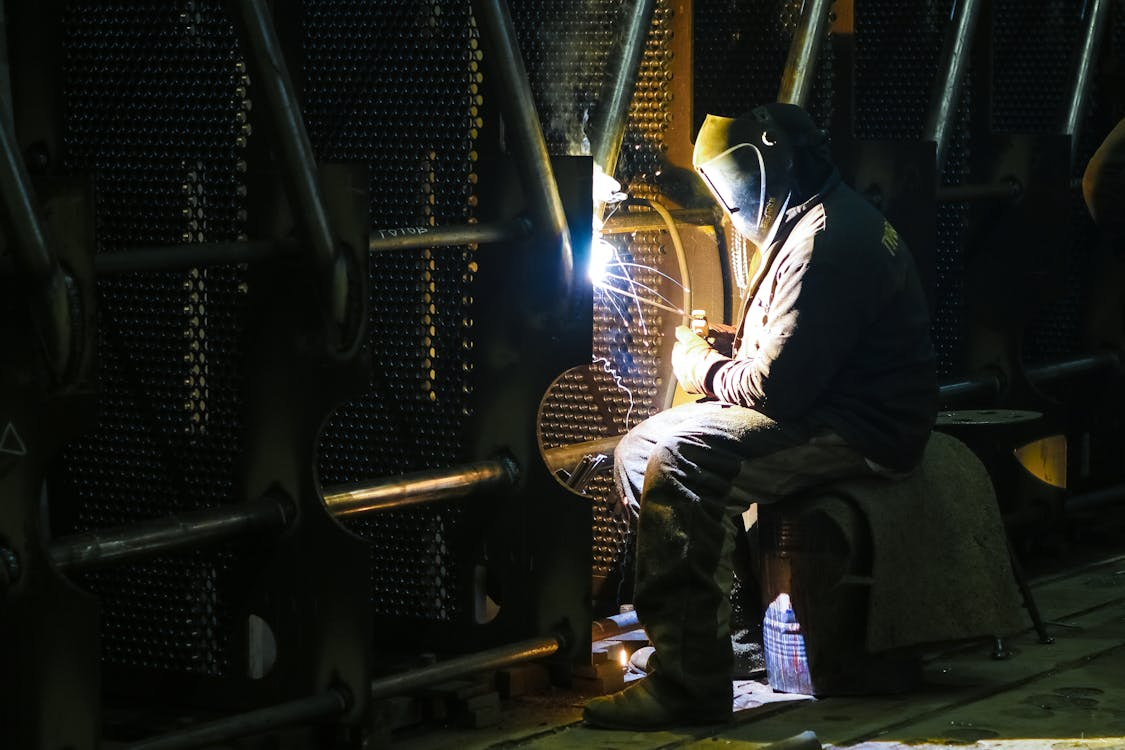
A good apprentice learns by doing, but in plumbing, welding, and surgery, the first mistakes can flood a floor, weaken a joint, or harm a patient. Supervision helps, yet time and risk still set a hard ceiling. When a team brings in mobile game services for training, the goal stays practical: more repetitions, clearer feedback, and fewer costly surprises before anyone touches live equipment. Many teams also ask for apps that run on the phones crews already carry, because new devices add friction.
Mobile augmented reality fits that constraint. A phone becomes a viewfinder where a virtual valve assembly sits on a real workbench, a weld seam highlights heat zones, or a surgical field marks the next safe move. The learner can practice the steps, see the consequences, and reset in seconds.
The cost of early mistakes
Trade work is full of “small” decisions that compound. A plumber chooses fitting angles, sealant types, and a torque feel. A welder chooses travel speed, torch angle, and arc length. A resident chooses where to cut, how to retract, and when to pause. These choices look simple in a diagram. They are not simple in a cramped mechanical room or under an operating light.
Workforce demand makes the training problem sharper. The U.S. Bureau of Labor Statistics projects about 44,000 openings per year on average for plumbers, pipefitters, and steamfitters, and it describes apprenticeships that typically run multiple years with roughly 2,000 hours of paid on-the-job training each year. The details in the BLS outlook help explain why instructor time is scarce and why early practice needs guardrails.
Mobile AR games do not replace apprenticeships or clinical rotations. They change the early phase, when learners need repetition without turning every repetition into a real incident. They also help in the gaps between supervised sessions, when skills either settle into habit or slide back into uncertainty.
Designing an AR drill that feels like work
A training game succeeds when it feels like a job task with guardrails. It needs a tight loop: see, act, get feedback, repeat. The feedback has to be specific. “Wrong” is not an instruction. “Your cut line drifted, and you entered a no-go zone” is an instruction.
In plumbing, a drill can start with a simple scan of a printed marker on a fitting. The overlay shows the correct parts and orientation, then asks for a sequence: measure, cut, deburr, dry fit, then finalize. If the learner skips deburring, the game can show a damaged O-ring and a slow leak that appears only after a virtual pressure test. If the learner picks the wrong trap height, the game can flag a future clog risk and point to the rule behind it. The lesson stays calm, but it stays strict.
Welding modules can teach what the eye must learn to notice. Mobile AR can overlay a target path, show travel speed, and mark where heat builds. A learner rehearses set-up steps, then practices “reading” the bead by comparing their path to an ideal. Scoring should explain the error in plain language, linking wobble to porosity risk or excess speed to undercut.
Surgery training has to keep the scope tight. A phone is not a full operating room, but it can rehearse micro-skills that keep patients safe: sterile setup, instrument handling, safe handoffs, and checklist timing. AR prompts can also train recognition, like spotting a warning sign that should trigger a pause.
Spatial computing ties these drills together. Deloitte describes it as the blend of VR, AR, connected sensors, and analytics that merges physical and digital work, which is why training is a natural use case for hands-on roles. The framing in Tech Trends points in a useful direction: keep the digital layer close to real context, so practice transfers back to the job.
Shipping a program instructors can trust
A training game fails when it is fun but vague. Instructors need it to act like a tool. That means clear skills, strict scoring, and records that stand up in a safety review. It also means the drill has to match how work is actually done, under local codes and real protocols.
One disciplined build path keeps teams aligned:
- Pick tasks with high incident risk or high rework cost, then define each skill in one sentence tied to a real failure mode.
- Capture instructors performing the task, including checks and the small adjustments that rarely show up in written SOPs.
- Decide what the camera must recognize and what can be simulated, so the drill stays stable in messy lighting and tight spaces.
- Write feedback that explains errors, set pass criteria instructors can defend, then pilot and tune difficulty so it stays strict but fair.
This is where mobile game services matter beyond art and code. The work includes device testing across phone models, offline use for basements and job sites, and interaction patterns that still work with gloves and dirty hands. It also includes admin tools for content updates, plus reporting that shows where learners stall, not only where they finish.
McKinsey’s Technology Trends report treats immersive-reality technologies as a frontier area and notes that adoption varies by use case, with smart glasses gaining traction while headsets have moved more slowly in many settings. That split matters for rollout, because phones are already in pockets, and glasses can be a later step when the workflow is ready.
From there, the operational question is simple: where does practice live in the week? The better programs treat AR modules as short drills. Ten minutes before a shift, a learner rehearses a valve install. Before a simulation lab, a learner repeats sterile prep and handoffs. Instructor time then goes to the hard part, the part that needs a human eye and judgment.
When the program scales, content drift becomes the enemy. Shops switch tools and materials. Hospitals update protocols. If drills are modular and versioned, updates become routine, and old content does not linger.
N-iX Games can fit into this kind of work as a build partner when training needs game-grade feedback, but the tone must stay serious.
Conclusion
Mobile AR games make practice safer by moving early repetitions away from hazards. Done with strict task design and instructor-trusted feedback, they also make practice more frequent and measurable. Small change, real payoff, and fewer rushed decisions. With the right mobile game services in the plan, risky work becomes a learnable routine, one careful repetition at a time.
