
 Admin
Admin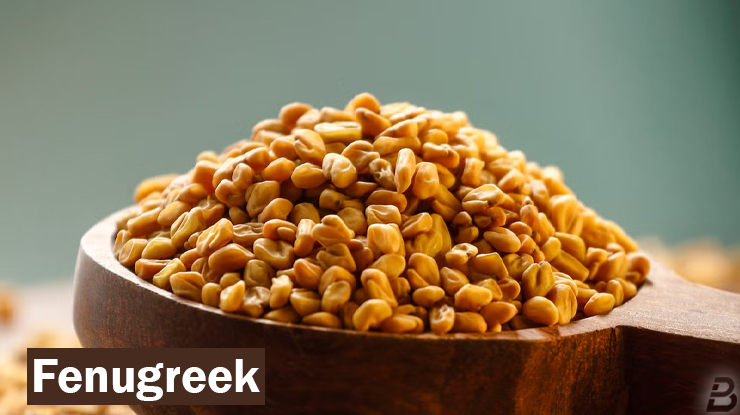
Fenugreek is a natural plant that many people use in daily life. It is known for its small seeds and green leaves. Fenugreek has been used for a very long time in food, home remedies, and traditional care. Today, people around the world still use it because it is easy to find, simple to use, and full of helpful nutrients.
What Is Fenugreek?
Fenugreek is a plant that belongs to the legume family. This is the same family as beans and lentils. The plant grows small green leaves and yellow flowers. After flowering, it produces seeds that are light brown and hard.
People use two main parts of the plant:
- Fenugreek seeds
- Fenugreek leaves
The seeds are the most common part used. They have a strong smell and a slightly bitter taste. The leaves are often used fresh or dried, especially in cooking.
Fenugreek grows well in warm places and is widely grown in countries like India, Egypt, and parts of the Middle East.
A Short History of Fenugreek
Fenugreek has been used for thousands of years. Ancient people used it in food, farming, and daily care. It was known in old cultures as a useful and valuable plant.
In the past, fenugreek was used to:
- Flavor food
- Support digestion
- Care for skin and hair
- Feed animals
Over time, its use spread to many parts of the world. Even today, fenugreek remains an important part of many traditional lifestyles.
Fenugreek in Everyday Cooking
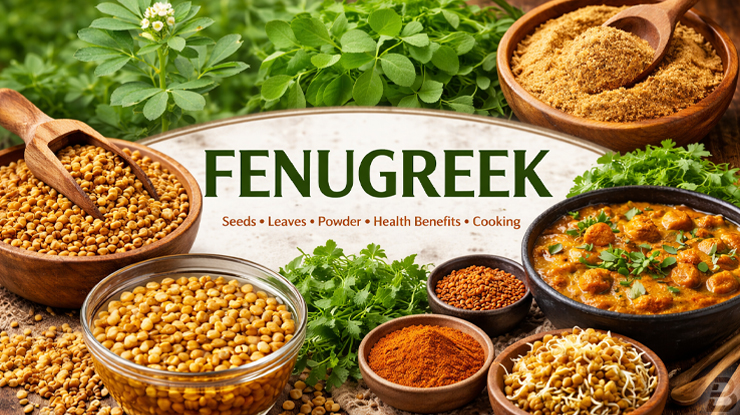
Fenugreek is popular in cooking because it adds a special taste to food. The seeds are often used whole or ground into powder. The leaves are used fresh or dried.
Taste and Flavor
Fenugreek has a warm, slightly sweet, and slightly bitter taste. When cooked, the bitterness becomes softer. Many people like its deep and rich flavor.
Common Food Uses
Fenugreek is used in many dishes, such as:
- Curries and soups
- Spice mixes
- Bread and flatbread
- Vegetable dishes
- Pickles and sauces
The leaves are often added to meals for extra flavor and color. The seeds are usually roasted or soaked before use to reduce bitterness.
Nutritional Value of Fenugreek
Fenugreek is rich in natural nutrients. It contains:
- Fiber
- Plant protein
- Vitamins like vitamin B and vitamin C
- Minerals such as iron, magnesium, and potassium
Because of these nutrients, fenugreek is often added to a balanced diet. The high fiber content is one reason many people include it in their daily meals.
Health Benefits of Fenugreek
Fenugreek is known for many traditional benefits. While it is not a medicine, people use it as part of a healthy lifestyle.
Supports Digestion
Fenugreek seeds are rich in fiber. Fiber helps food move smoothly through the stomach and intestines. Many people use fenugreek to feel lighter after meals.
Helps Control Appetite
Because fenugreek absorbs water and swells, it can help people feel full for longer. This may help with portion control when eating.
Supports Blood Sugar Balance
Fenugreek is often used by people who want to support healthy blood sugar levels. The fiber in the seeds helps slow how fast sugar enters the body.
Supports Heart Health
The fiber in fenugreek may help reduce unhealthy fats in the body. This supports general heart health when combined with a good diet.
Fenugreek for Skin and Hair
Fenugreek is not only used in food. Many people use it for skin and hair care.
For Skin
Fenugreek paste is sometimes applied to the skin. People believe it helps:
- Keep skin soft
- Clean pores
- Support a healthy glow
For Hair
Fenugreek seeds are often soaked and crushed into a paste. This paste is used on the scalp and hair. People use it to:
- Reduce dryness
- Support hair strength
- Add shine
These uses are traditional and passed down through generations.
Fenugreek for Women and Men
Fenugreek is used by both women and men for different reasons.
For Women
Many women use fenugreek as part of their daily routine. It is traditionally used to support:
- General energy
- Comfort during monthly cycles
- Milk flow for new mothers
For Men
Men often use fenugreek to support:
- Energy levels
- Physical strength
- Overall wellness
These uses are based on tradition and personal experience.
Different Forms of Fenugreek
Fenugreek is available in many forms, making it easy to use.
Seeds
Whole seeds are the most natural form. They can be soaked, cooked, or ground.
Powder
Fenugreek powder is made from ground seeds. It is easy to add to food and drinks.
Capsules
Some people prefer capsules because they are simple to take and have no taste.
Tea
Fenugreek tea is made by boiling seeds in water. It has a strong taste but is easy to prepare.
How to Use Fenugreek Safely
Fenugreek is generally safe when used in normal amounts. However, it is important to use it carefully.
Helpful tips:
- Start with small amounts
- Drink enough water when using seeds
- Avoid too much use at once
Some people may feel stomach discomfort if they use too much fenugreek.
Pregnant women should talk to a health expert before using fenugreek regularly.
Why Fenugreek Is Still Popular Today
Fenugreek remains popular because:
- It is natural and affordable
- It is easy to use
- It has many traditional uses
- It fits well into daily meals
People like fenugreek because it connects food, culture, and simple care in one plant.
Final Thoughts
Fenugreek is a simple plant with a long history. People use it in food, home care, and daily routines. It is valued for its nutrients, flavor, and traditional benefits. Whether used in cooking or personal care, fenugreek continues to be a trusted and useful plant in everyday life.
Frequently Asked Questions About Fenugreek
1. What is fenugreek used for?
Fenugreek is used in cooking, home care, and traditional wellness routines.
2. Can I eat fenugreek every day?
Yes, many people use small amounts daily as part of meals.
3. Does fenugreek have a strong taste?
Yes, it has a strong and slightly bitter taste, especially when raw.
4. How do I reduce the bitter taste?
Soaking or roasting the seeds helps reduce bitterness.
5. Is fenugreek good for digestion?
Many people use it to support digestion because it is high in fiber.
6. Can fenugreek help hair growth?
It is traditionally used to support hair strength and scalp care.
7. Is fenugreek safe for everyone?
Most people can use it safely, but some should be careful with large amounts.
8. How long should I soak fenugreek seeds?
Soaking them overnight is common and effective.
9. Can fenugreek help with weight control?
It may help you feel full longer, which supports mindful eating.
10. What is the best form of fenugreek to use?
Seeds and powder are the most common and natural forms.
READ MORE : Connectivity Issues HSSGamepad: Simple and Effective Fixes for Stable Connection
Connect with us for more information : Blog Pioneer
